 Research
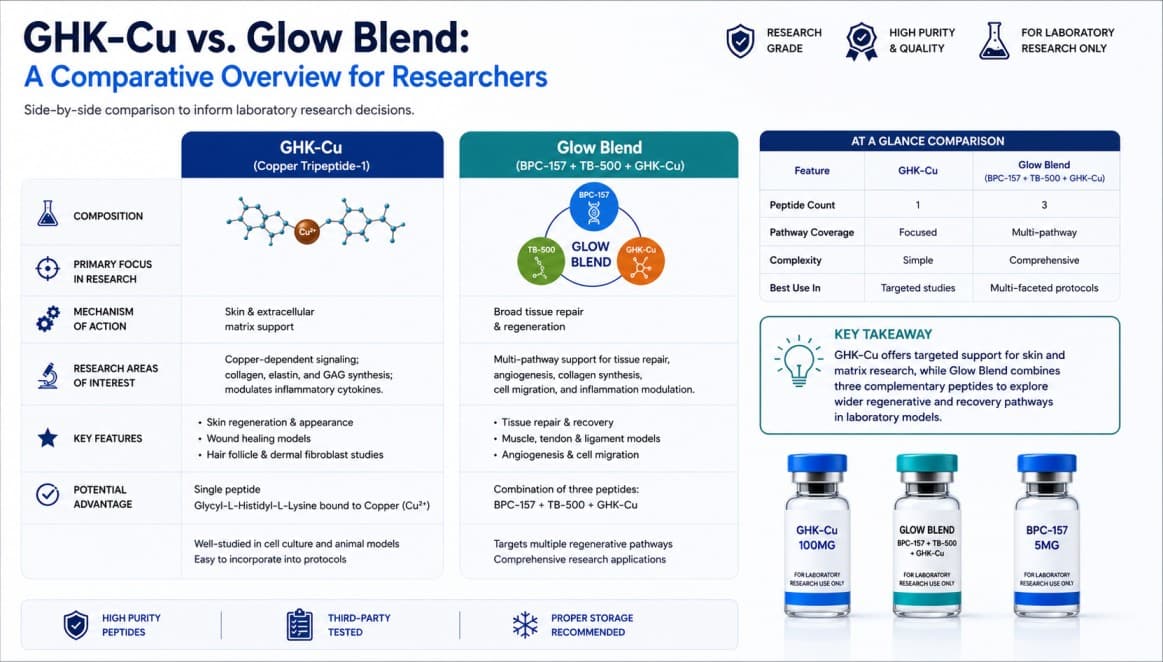
GHK-Cu vs. Glow Blend: A Comparative Overview for Researchers
Explore the differences between GHK-Cu and Glow Blend by examining peptide composition, formulation strategies, and laboratory research characteristics.
Read articleRESEARCH PURPOSE ONLY | USE CODE : FLEX100 for 10% OFF
FlexPep Journal
Guides, peptide science, storage best practices, and industry news from our research team. Written for in-vitro research use only.
ResearchExplore the differences between GHK-Cu and Glow Blend by examining peptide composition, formulation strategies, and laboratory research characteristics.
Read article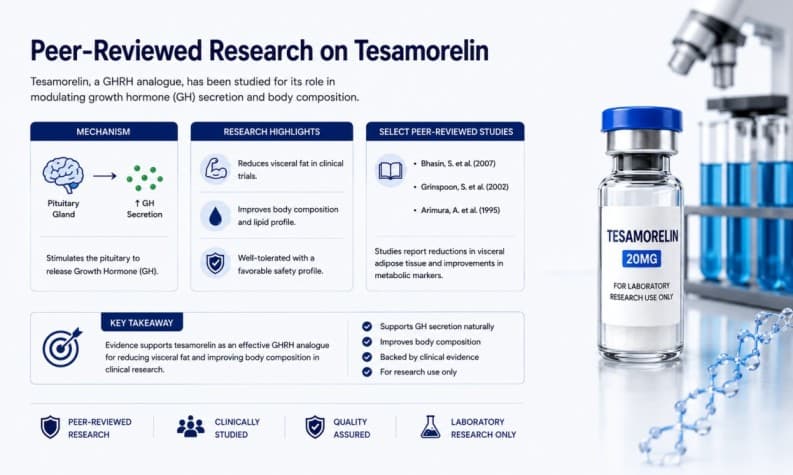 Research
Proper storage and handling are essential for preserving peptide integrity. This guide outlines commonly accepted laboratory practices for lyophilized peptide materials.
Read article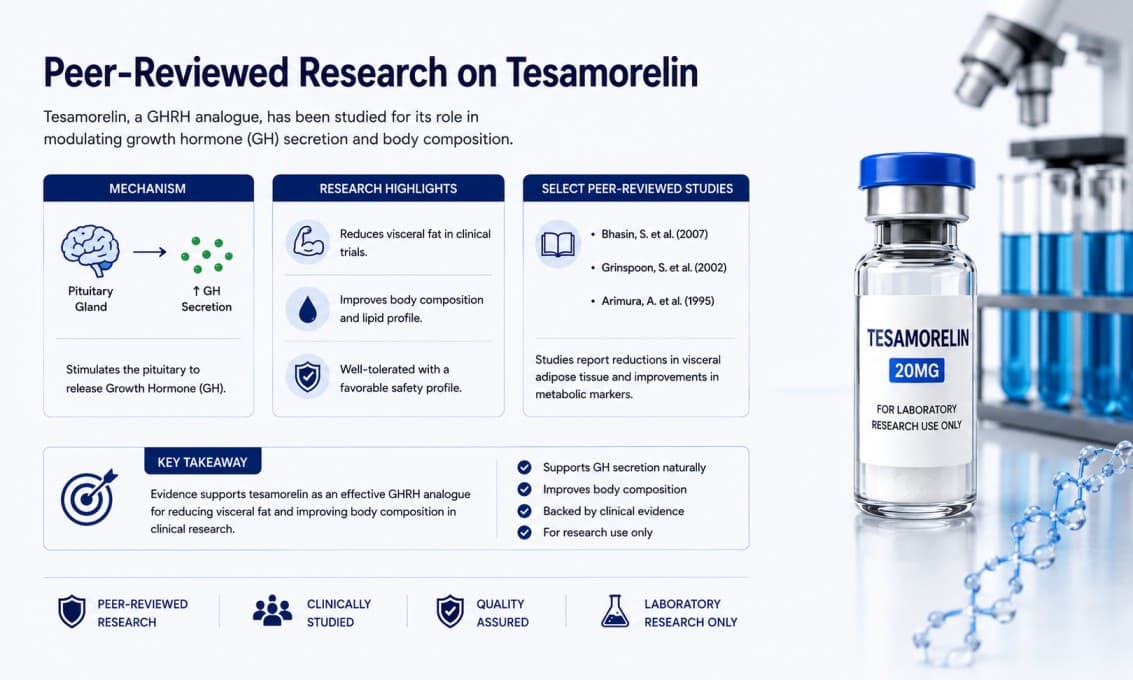 Research
This article summarizes peer-reviewed publications involving Tesamorelin, highlighting laboratory methodologies, analytical techniques, and peptide research developments.
Read article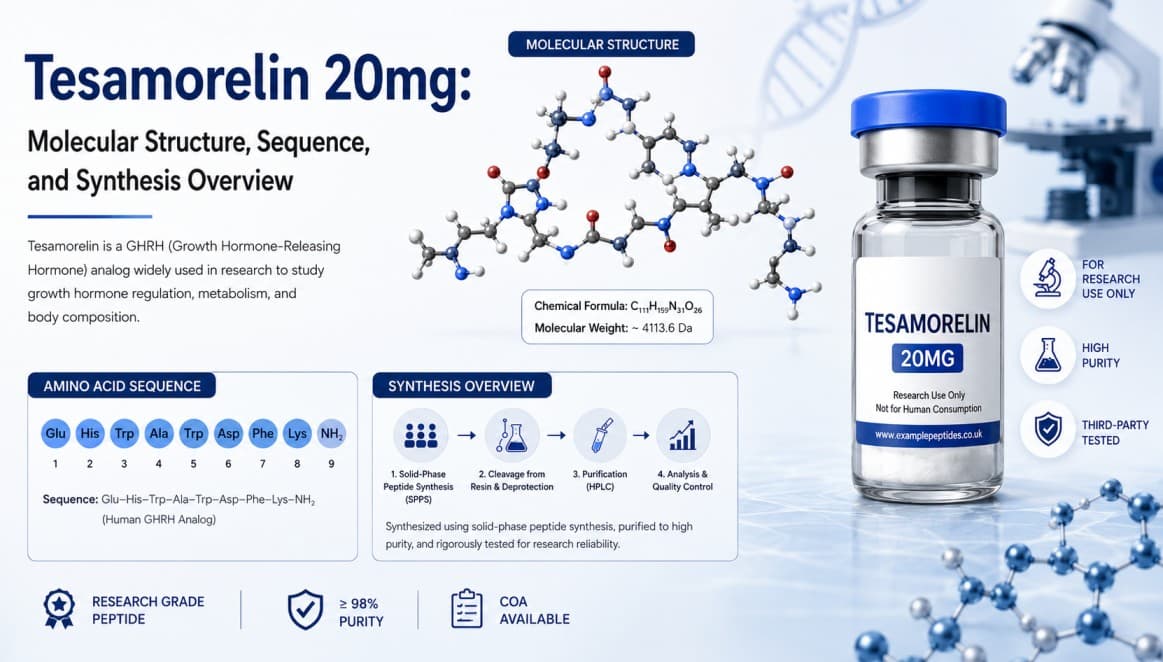 Research
Learn how Tesamorelin is structured, how its amino acid sequence differs from native GHRH, and how peptide synthesis techniques contribute to research-grade quality. This guide focuses on analytical chemistry and laboratory research.
Read article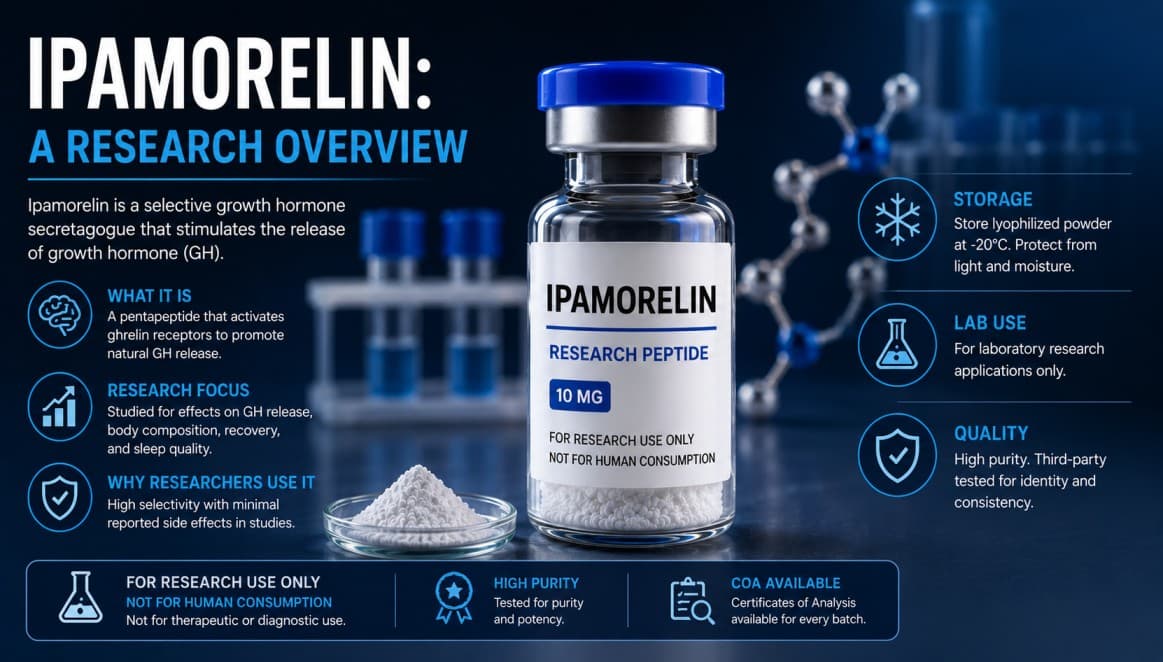 Research
Explore the latest findings on Ipamorelin research, including its role in growth hormone-related laboratory studies. This guide highlights research applications, peptide quality, storage, and best practices for scientific use.
Read article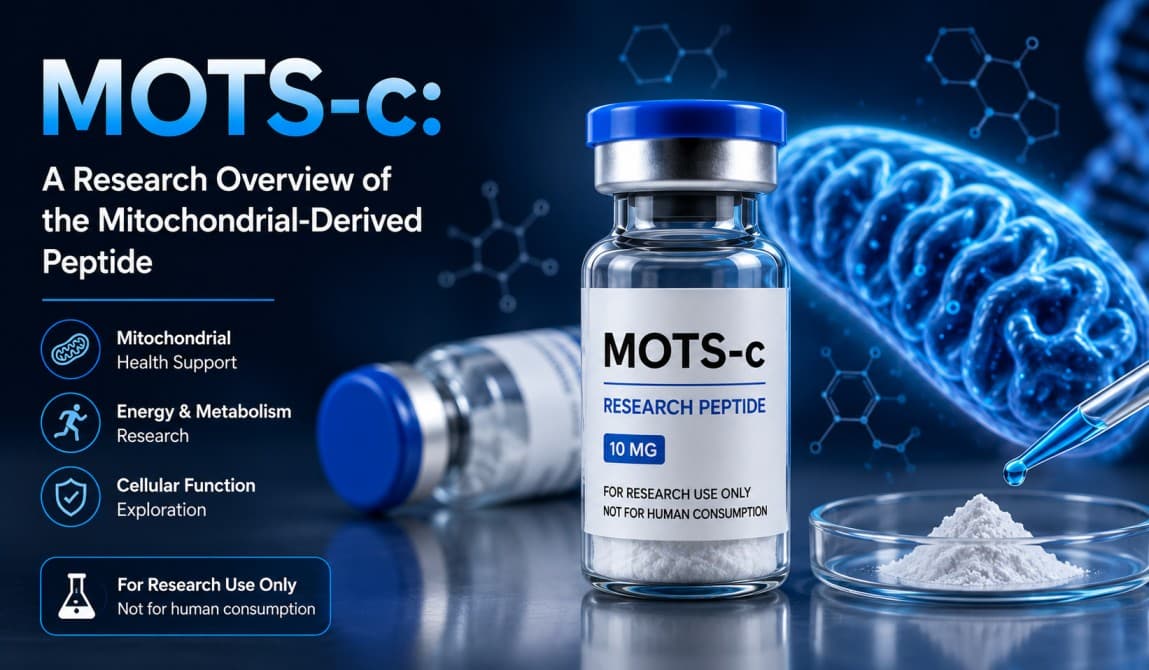 Research
Discover the latest research on MOTS-C, a mitochondrial-derived peptide studied for its potential role in cellular metabolism, energy regulation, and metabolic pathways. Explore current laboratory findings, research applications, and key considerations for scientific investigations.
Read article Research
Understand the role of bacteriostatic water in laboratory research, including its purpose, storage considerations, and importance for maintaining research consistency.
Read article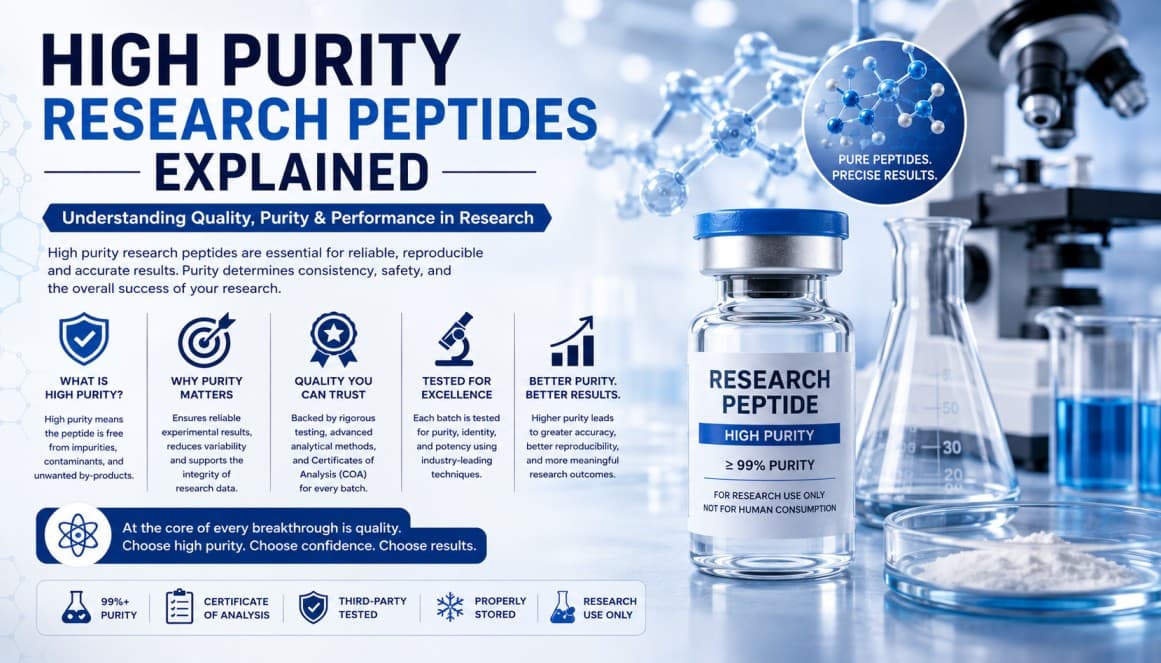 Research
Discover why peptide purity matters in laboratory research and how high-purity research peptides contribute to more accurate, consistent, and reproducible results.
Read article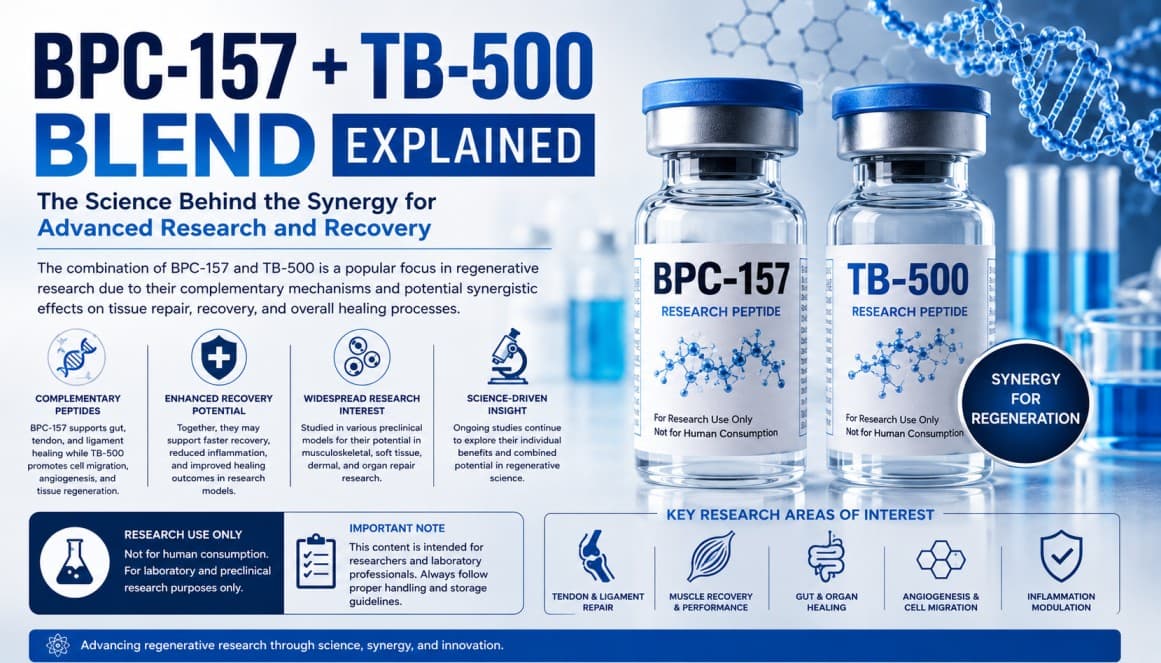 Research
BPC-157 + TB-500 Blend Explained explores the scientific rationale behind combining these two research peptides, highlighting their complementary mechanisms, potential areas of investigation, and current preclinical research. This guide is intended for educational and laboratory research purposes only.
Read article10% off orders over £100 with code FLEX100
Research purposes only
This website is for research purposes only. You must be 18 or older to enter. By continuing, you confirm that you understand and agree.