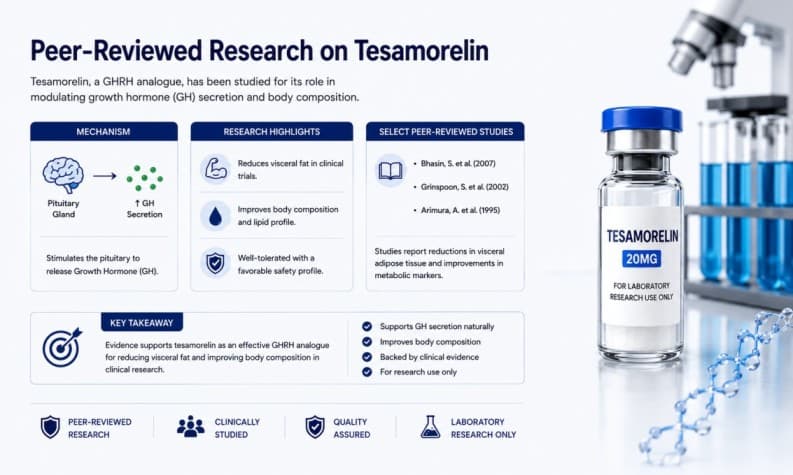
Proper storage and handling are essential for preserving peptide integrity. This guide outlines commonly accepted laboratory practices for lyophilized peptide materials.
For laboratory research use only. Not for human or animal consumption.
Introduction
Proper handling of lyophilized (freeze-dried) research peptides like tesamorelin is essential to preserving sample integrity for laboratory work. This article outlines general best-practice principles for storage and reconstitution of peptide samples in a research setting.
Why Lyophilization Is Used
Peptides are typically supplied in lyophilized powder form because this state offers significantly greater long-term stability than a liquid solution. In liquid form, peptides are more vulnerable to degradation from hydrolysis, oxidation, and microbial growth. Lyophilization removes water content, substantially slowing these degradation pathways and extending shelf life for research purposes.
Storage Best Practices
Before reconstitution (lyophilized powder):
- Store at the temperature specified on the Certificate of Analysis — typically -20°C for long-term storage, or refrigerated (2–8°C) for shorter-term use
- Protect from light, as some peptide bonds are photosensitive
- Keep sealed and protected from humidity, which can compromise the lyophilized cake
- Avoid repeated temperature fluctuations, which can encourage moisture ingress
After reconstitution (in solution, for laboratory analysis):
- Reconstituted peptide solutions are generally far less stable than the lyophilized form and should be used promptly for the intended laboratory analysis
- Store reconstituted samples refrigerated, and avoid repeated freeze-thaw cycles, which can degrade peptide structure and reduce sample integrity for testing
- Aliquoting a reconstituted sample into smaller portions for single-use laboratory analysis can help minimise degradation from repeated handling
General Principles of Reconstitution for Laboratory Use
When preparing a peptide sample for laboratory analysis (e.g., for HPLC verification, further chemical study, or in-vitro assay work), general laboratory chemistry practice includes:
- Using an appropriate sterile diluent as specified for the analytical method being used
- Adding diluent slowly down the side of the vial rather than directly onto the lyophilized powder, to avoid excessive agitation of the peptide structure
- Gently swirling rather than shaking the vial, as vigorous agitation can cause protein/peptide denaturation
- Allowing the powder to fully dissolve before proceeding with any analytical step
This guidance describes general laboratory sample-handling chemistry and is not intended as, and should not be interpreted as, instructions for human administration of any product.
Documentation and Traceability
Good laboratory practice includes logging:
- Batch/lot number
- Date of reconstitution
- Diluent used and volume
- Storage conditions post-reconstitution
This ensures traceability for any subsequent analytical work and supports data integrity in a research context.
Regulatory Note
This article describes general laboratory sample-handling principles for a lyophilized research chemical. Tesamorelin sold in the UK as a research compound is not licensed as a medicine, and none of the information above constitutes dosing, administration, or medical guidance for human use, in line with MHRA regulations under the Human Medicines Regulations 2012.
*This article is provided for scientific and educational purposes only. It does not constitute medical advice. Products referenced are sold strictly for laboratory research use **only and are not licensed medicines in the UK.
Disclaimer: The information provided in this article is intended solely for educational and scientific discussion regarding laboratory research materials. Products referenced by Flex Peptides are supplied exclusively for laboratory research purposes and are not intended for human consumption, therapeutic use, medical treatment, or diagnostic applications. Researchers are responsible for complying with all applicable UK laws, regulations, and institutional laboratory practices.