Discover what glutathione is and why it is widely studied in antioxidant, cellular and biochemical research. Learn about research quality and what to consider when buying glutathione in the UK.
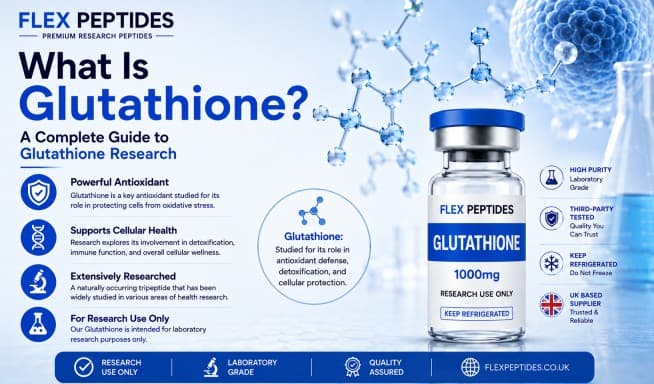
Glutathione is a tripeptide — glutamate, cysteine, and glycine — and one of the most heavily studied endogenous antioxidants in oxidative-stress research. It's central to cellular redox regulation and antioxidant defence, which is why it turns up across a wide range of research contexts, from liver-function studies to broader cellular-defence mechanisms.
What is glutathione?
As a tripeptide rather than a longer synthesised peptide, glutathione is naturally produced within cells and functions as the primary intracellular antioxidant in most tissue types. Research-grade glutathione supplied for laboratory use is synthesised and purified to the same standard as any other research peptide in this catalogue — independently verified, batch-documented, and explicitly research-use-only.
Why it's studied
Glutathione research spans oxidative-stress models, liver-function research, and broader studies of cellular defence mechanisms. Because it's the primary antioxidant in most cell types, it's a common reference point in research examining how cells respond to and manage oxidative damage.
Glutathione vs. NAC
N-acetylcysteine (NAC) is closely linked to glutathione in the research literature but is a distinct compound — NAC is a precursor that supports glutathione synthesis rather than an active antioxidant in its own right. See our full comparison for the structural and functional detail.
Glutathione and NAD+: a shared research context
Glutathione and NAD+ both feature in cellular-ageing and oxidative-stress research, and some studies examine the two together to understand broader patterns of cellular redox regulation. See our NAD+ research guide if your work touches both pathways.
Sourcing and specifications
Molecular Formula: C10H17N3O6S
Molecular Weight: 307.32 g/mol
Purity: 99%
Sequence: γ-L-Glutamyl-L-Cysteinylglycine
Form:Lyophilized powder
Storage
Store as you would any lyophilised research peptide: –20°C or below, protected from light, heat, and moisture until reconstitution, then follow the stability window on your batch's COA.
Where to source it
Apply the same supplier-vetting standard as for any research peptide — see our full supplier checklist.
Disclaimer
Glutathione, as supplied by Flex Peptides, is intended strictly for laboratory research and is not for human or animal use.
Related reading
Glutathione vs NAC: What Is the Research Difference?
NAD+ and MOTS-c: Cellular Research Guide