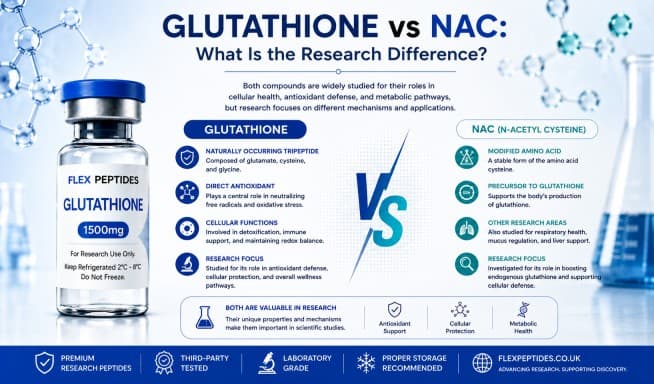
Explore the research differences between Glutathione and NAC, including their roles in antioxidant defence, cellular pathways and glutathione metabolism. Learn what to consider when buying Glutathione for research in the UK.
Glutathione and NAC (N-acetylcysteine) are closely linked in research literature, but they are distinct compounds with different roles in cellular biochemistry.
What Is NAC?
NAC is a derivative of the amino acid cysteine and serves as a direct precursor in the body's own glutathione synthesis pathway. In research contexts, NAC is often studied for its capacity to support intracellular glutathione production.
Structural and Functional Differences
| Glutathione | NAC |
|---|---|
| A tripeptide (three linked amino acids) | A single modified amino acid |
| The active antioxidant molecule itself | A precursor that supports glutathione synthesis |
| Larger, more complex molecule | Smaller, simpler molecule |
Why Researchers Study Both
Some studies examine glutathione directly to understand its antioxidant and detoxification functions, while others focus on NAC to explore how precursor availability influences the body's internal glutathione production. Comparing the two provides a fuller picture of the overall pathway.
Overlapping Research Areas
Both compounds appear in studies related to oxidative stress, liver function, and cellular defence mechanisms, though the specific research questions and protocols differ depending on which molecule is under investigation.
Disclaimer
Glutathione and NAC, as supplied by FlexPeptides, are intended strictly for laboratory research. Neither compound is licensed as a medicine by the MHRA, and neither is intended for human consumption or use. This article does not compare the two for personal supplementation purposes.