What is the difference between peptides and proteins? Explore their structures, amino acid composition, biological roles and importance in scientific research.
Introduction
Peptides and proteins are two important parts of biological science. They are often mentioned together because both are made from amino acids. However, they are not exactly the same.
For people exploring peptide research for the first time, understanding the difference between peptides and proteins can make scientific information easier to follow.
In this guide, we explain what peptides and proteins are, how they differ, where they are found in biological systems and why both are important subjects in scientific research.
What Are Peptides?
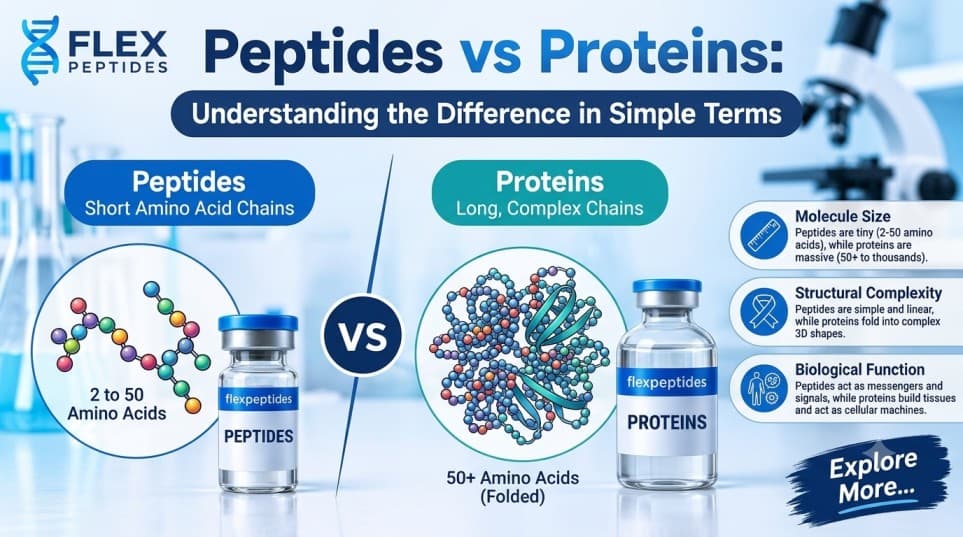
Peptides are short chains of amino acids connected through peptide bonds.
Amino acids are the building blocks used to form peptides and proteins. Different amino acid sequences produce different peptides, each with its own molecular characteristics.
Peptides are studied in several scientific areas, including cellular signalling, biological communication, molecular interactions, enzyme-related research and receptor interactions.
Their relatively short structures make them an interesting subject in molecular and biological research.
What Are Proteins?
Proteins are larger, more complex biological molecules made from one or more chains of amino acids.
They play important roles in biological systems and contribute to many cellular processes.
Proteins help support cellular structures, transport substances, participate in chemical reactions, support biological communication and contribute to immune system functions.
Proteins are essential subjects in biology, biochemistry and medical research.
Peptides vs Proteins: Understanding the Main Differences
The main difference between peptides and proteins is their size and structural complexity.
Peptides are generally shorter chains of amino acids, whereas proteins tend to be longer and often have more complex three-dimensional structures. Both are made from the same basic building blocks, but their lengths, arrangements and biological roles can differ.
There is no universally strict amino-acid length that separates every peptide from every protein. The terminology depends partly on structural and biological context.
How Are Peptides and Proteins Connected?
Peptides and proteins share the same basic building blocks: amino acids.
When amino acids join together, they form chains through chemical bonds known as peptide bonds. These chains can differ in length, arrangement and three-dimensional structure.
The sequence of amino acids influences the characteristics of the resulting molecule.
This connection explains why peptides and proteins are frequently discussed together in biological research.
Examples of Peptides in Scientific Research
Several peptides are explored in different research fields.
BPC-157 is a synthetic peptide investigated in preclinical research models.
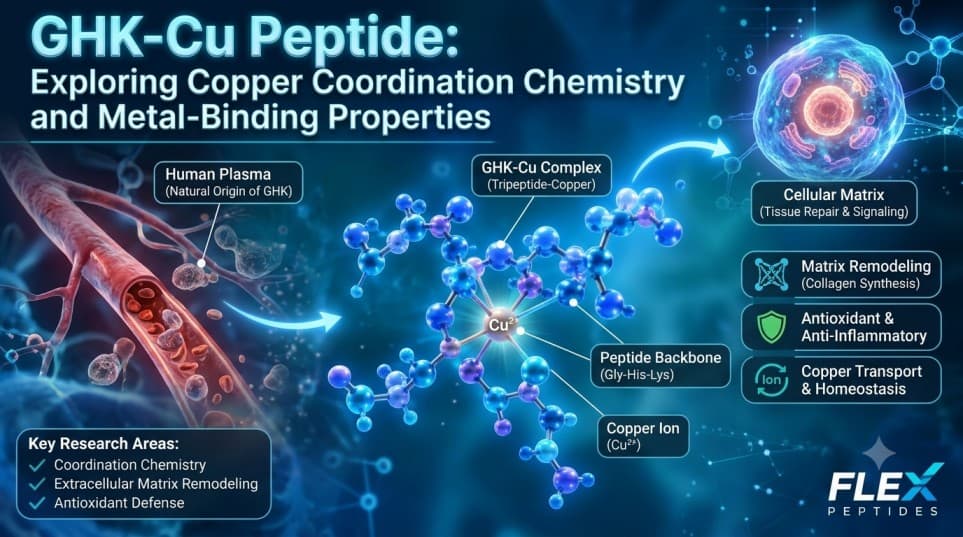
GHK-Cu is a copper-binding peptide studied in relation to copper-peptide interactions.
KPV is a short peptide investigated in research involving inflammatory signalling.
MOTS-c is a mitochondrial-derived peptide studied in relation to cellular metabolism.
Each compound has a distinct molecular identity and research background.
Why Is It Important to Understand the Difference?
Understanding peptides and proteins helps readers interpret scientific information more accurately.
It can also help explain why different research materials have different molecular sizes, structures and analytical requirements.
For researchers, this distinction is relevant when reviewing scientific literature, molecular identification reports, product descriptions, research documentation and analytical testing information.
Frequently Asked Questions
Are peptides smaller than proteins?
Generally, yes. Peptides are usually shorter amino acid chains, while proteins tend to have longer and more structurally complex arrangements.
Are peptides made from amino acids?
Yes. Peptides are chains of amino acids connected by peptide bonds.
Are proteins made from peptides?
Proteins are formed from amino acid chains. The distinction between a long peptide and a protein is not always based on a strict size boundary.
What is the main difference between peptides and proteins?
Their size, structural complexity and biological context are the main differences.
Are peptides and proteins studied in the same scientific fields?
They overlap in many research areas, including molecular biology, biochemistry and cellular signalling.
Conclusion
Peptides and proteins share the same fundamental building blocks but differ in their typical size, structure and complexity.
Understanding these differences provides a useful foundation for exploring molecular biology and peptide-related research.
For anyone beginning to explore laboratory research materials, learning the basic terminology is an important step towards understanding product descriptions and scientific publications.
Explore Flex Peptides
Flex Peptides provides a range of research-grade peptide materials with product information and available quality documentation.
Research Use Only: All products are intended strictly for laboratory and in-vitro research purposes. They are not intended for human or veterinary use, consumption, administration, diagnosis or treatment.