Discover the BPC-157 amino acid sequence and understand its 15-residue molecular structure. Learn why sequence verification, HPLC and mass spectrometry matter in peptide research.
Introduction
Understanding the molecular structure of a research peptide is an important part of identifying and characterising the compound. BPC-157 is a synthetic pentadecapeptide, meaning that it contains 15 amino acid residues arranged in a specific sequence.
Its sequence provides a starting point for understanding its chemical identity, composition and analytical characteristics. In this article, we explore the BPC-157 amino acid sequence, its structural features and the importance of sequence verification in laboratory research.
What Is the BPC-157 Amino Acid Sequence?
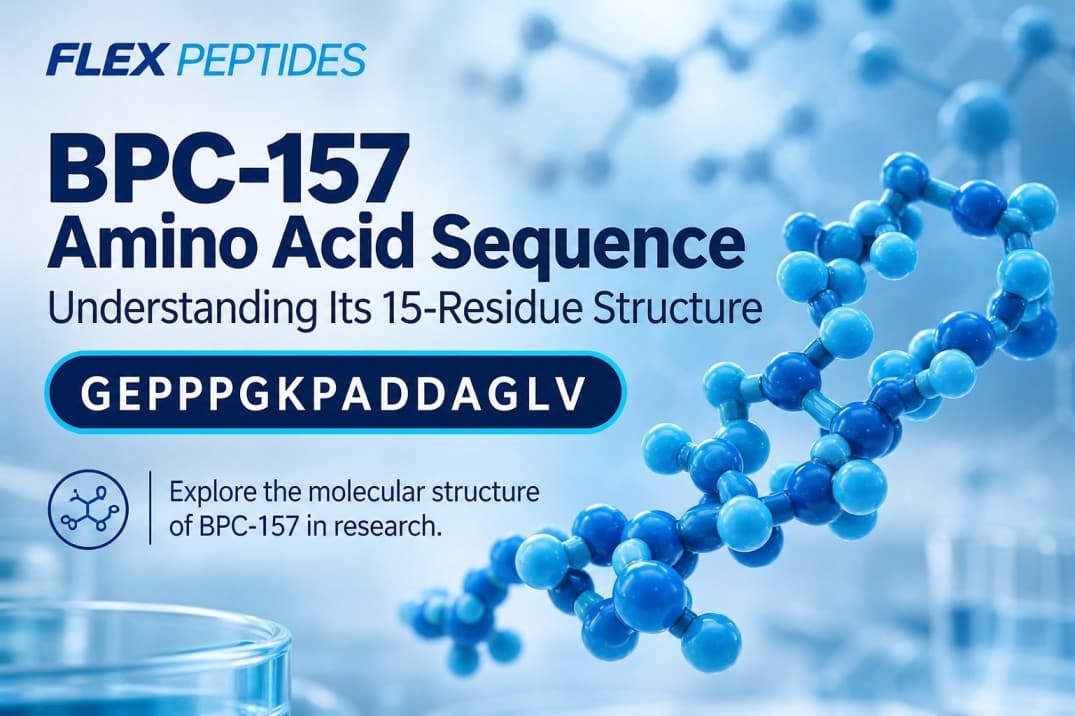
The recognised one-letter amino acid sequence of BPC-157 is:
GEPPPGKPADDAGLV
This sequence contains 15 amino acid residues. These include glycine, glutamic acid, proline, lysine, alanine, aspartic acid, leucine and valine.
The order of these amino acids is important because changing even one residue can create a different molecular structure. Therefore, a product name alone is not sufficient to establish the identity of a peptide sample.
Why Does the 15-Amino-Acid Structure Matter?
The amino acid sequence represents the primary structure of a peptide. It provides a reference for researchers investigating molecular identity and comparing analytical results.
BPC-157 contains several notable structural features:
- Three consecutive proline residues near the beginning of the sequence.
- An additional proline residue at position eight.
- Two consecutive aspartic acid residues.
- Leucine and valine at the C-terminal end.
These features describe the composition of the molecule. However, knowing the sequence alone does not establish purity, stability, biological activity or suitability for a particular experiment.
How Can Researchers Verify BPC-157 Identity?
Laboratories use complementary analytical techniques to investigate peptide identity.
Mass spectrometry (MS) measures molecular mass and helps determine whether a sample is consistent with the expected molecular composition.
Tandem mass spectrometry (MS/MS) examines fragmentation patterns and can provide additional information supporting sequence identification.
High-performance liquid chromatography (HPLC) separates components within a sample and helps assess chromatographic purity under the conditions of the analytical method.
Batch-specific documentation connects analytical findings to a particular batch and should identify the material, methods and reported results.
Combining suitable methods provides stronger evidence than relying on a single analytical result.
Why Is Sequence Verification Important?
Accurate sequence identification supports research reproducibility. If laboratories use materials with different sequences or chemical modifications, their results may not be directly comparable.
Researchers should therefore consider the complete material specification, including the amino acid sequence, molecular mass, chemical form and any relevant modifications.
They should also check whether the analytical documentation relates to the exact batch being investigated.
Frequently Asked Questions
How many amino acids are in BPC-157?
BPC-157 contains 15 amino acid residues, which is why it is described as a pentadecapeptide.
What is the one-letter sequence of BPC-157?
The recognised sequence is GEPPPGKPADDAGLV.
Does the amino acid sequence prove peptide purity?
No. Sequence and purity are different quality attributes. Sequence analysis supports molecular identity, while HPLC can assess chromatographic purity.
Why is mass spectrometry used for peptide analysis?
Mass spectrometry provides molecular mass information. Tandem mass spectrometry can also provide fragmentation data that supports sequence identification.
Conclusion
The BPC-157 amino acid sequence, GEPPPGKPADDAGLV, defines a specific 15-residue peptide structure. Understanding this sequence helps researchers interpret analytical reports and assess whether a tested material is consistent with the intended compound.
For reliable laboratory documentation, sequence information should be considered alongside mass spectrometry, chromatographic analysis and batch-specific quality records.
Research-use notice: Flex Peptides products are supplied for laboratory research purposes only. They are not medicines and are not intended for human or veterinary consumption, diagnosis or treatment.