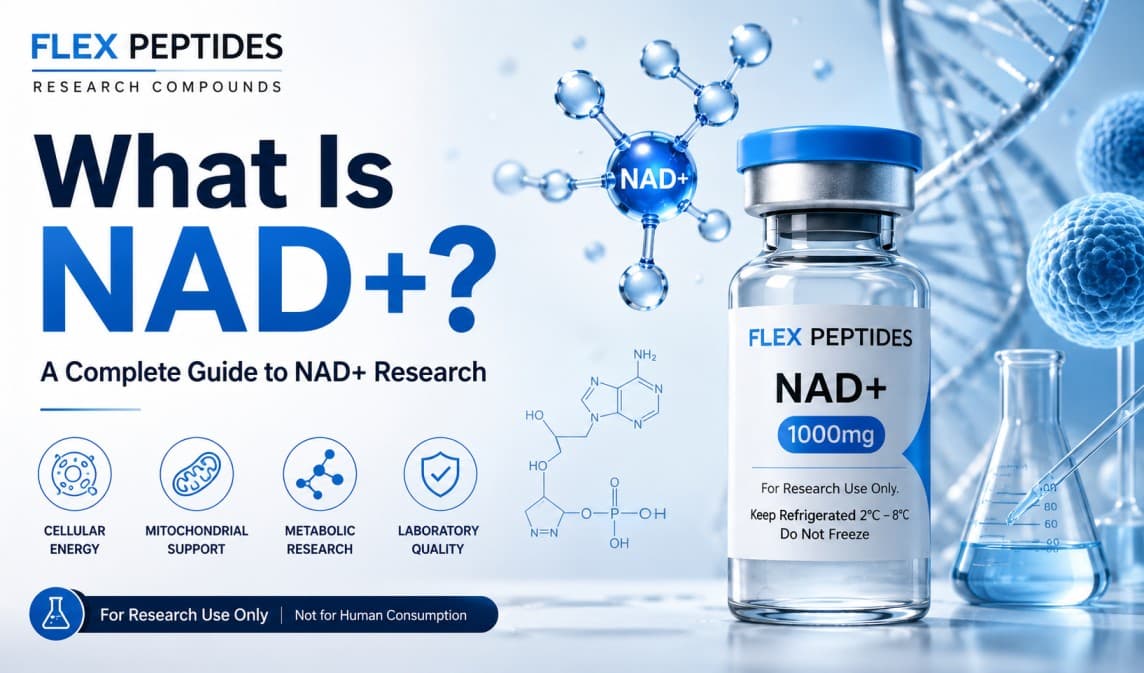
Discover what NAD+ is and how it is studied in cellular, mitochondrial and metabolic research. Learn what to consider when choosing NAD+ for research and explore options to buy NAD+ in the UK from Flex Peptides.
Nicotinamide adenine dinucleotide, or NAD+, is a coenzyme found in every living cell. It plays a central part in cellular metabolism, acting as a carrier molecule that shuttles electrons during energy production. Because of this role, NAD+ has become one of the more heavily studied molecules in cellular biology and ageing research.
The Basic Science
NAD+ exists in two related forms — an oxidised form (NAD+) and a reduced form (NADH) — which cycle back and forth as cells generate energy through metabolic pathways like glycolysis and the citric acid cycle. Beyond energy metabolism, NAD+ also acts as a substrate for enzymes such as sirtuins and PARPs, both of which are involved in DNA repair and cellular regulation.
Why It's a Research Focus
Laboratory studies have observed that NAD+ levels within cells tend to decline with age, which has driven a wave of scientific interest in understanding what that decline means for cellular function. Researchers use NAD+ as a tool to study:
- Mitochondrial function and cellular energy production
- DNA repair mechanisms
- Sirtuin activation pathways
- Broader questions in cellular ageing research
Sourcing NAD+ for Research
Research-grade NAD+ is typically supplied as a lyophilised powder, packaged for laboratory reconstitution and handling under controlled conditions. FlexPeptides supplies NAD+ strictly for use by qualified researchers and institutions.
Disclaimer
This article is intended for educational purposes only. NAD+ as supplied by FlexPeptides is a research chemical, not evaluated or licensed by the MHRA as a medicine, and is not intended for human consumption, injection, or any other form of use in or on the human body. No claims are made regarding therapeutic or medicinal benefit.