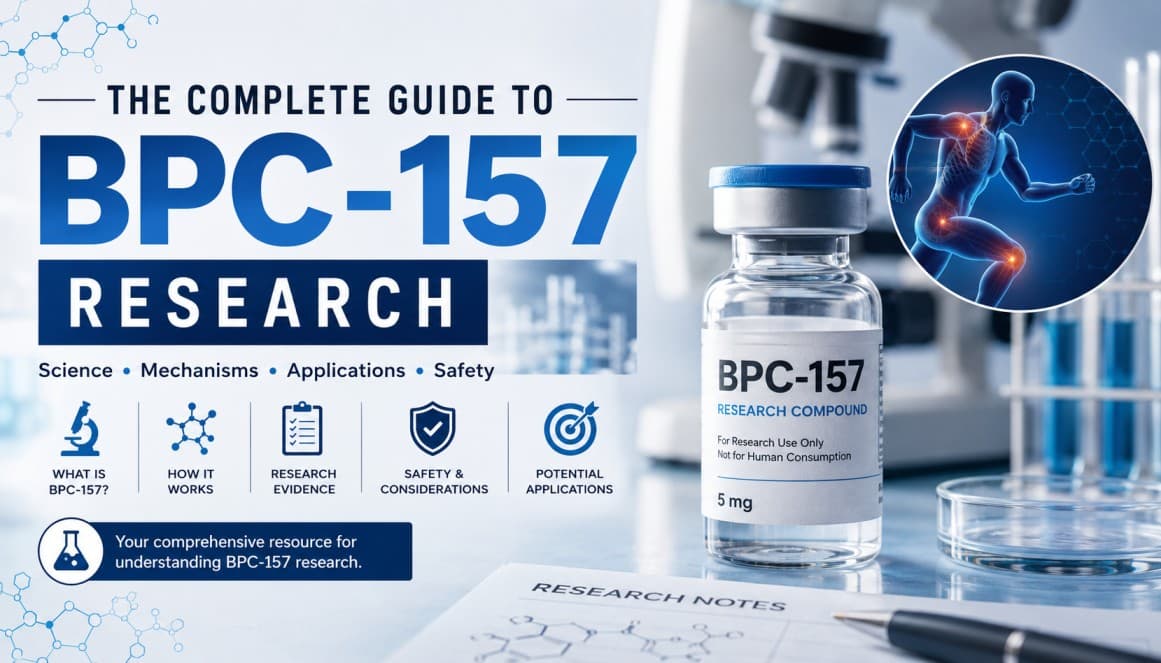
The Complete Guide to BPC-157 Research explores the latest scientific understanding of BPC-157, including its mechanisms, potential research applications, safety considerations, and quality standards. This guide is designed to help researchers stay informed with accurate, evidence-based information for laboratory research purposes only.
BPC-157 is one of the most widely studied synthetic peptides in the current research landscape. Derived from a protective protein found in human gastric juice, this pentadecapeptide has attracted significant scientific interest for its potential role in tissue repair, inflammation modulation, and gut health studies. This guide walks through what the research says, why laboratories are interested in it, and what to look for when sourcing material for legitimate research purposes.
What Is BPC-157?
BPC-157 (Body Protection Compound-157) is a synthetic sequence of 15 amino acids based on a naturally occurring protein in gastric juice. Since its identification, it has become a common subject in preclinical studies exploring angiogenesis (blood vessel formation), tendon and ligament healing, and gastrointestinal protection. Most of the available literature comes from animal models, with researchers examining how the peptide interacts with growth factor pathways and nitric oxide signalling.
It's important to be clear from the outset: BPC-157 is not an approved medicine in the UK, the EU, or the US. It has not been evaluated by the MHRA or FDA for human use, and any material available through peptide suppliers is intended strictly for laboratory and in-vitro research purposes.
Why Researchers Are Interested in BPC-157
A few themes come up repeatedly in the published literature:
Tissue and tendon research
Several animal studies have looked at how BPC-157 affects healing in tendon, ligament, and muscle tissue models, with particular focus on collagen organisation and recovery timelines after induced injury.
Gastrointestinal studies
Because of its origin in gastric juice, a substantial portion of the research examines its effects on gut lining integrity, models of colitis, and mechanisms of mucosal protection.
Vascular and angiogenesis research
Some studies explore how the peptide may influence the formation of new blood vessels, which is relevant to broader research into wound healing models.
Neurological research models
A smaller but growing body of work has looked at BPC-157 in the context of nerve regeneration models, though this area remains early-stage and far less established than the musculoskeletal literature.
Researchers should note that the majority of these studies are preclinical (animal or cell-based), and results in these models do not necessarily translate to humans. Peer-reviewed human clinical trials remain limited, which is a key reason regulatory bodies have not approved the compound for therapeutic use.
Sourcing Peptides for Legitimate Research
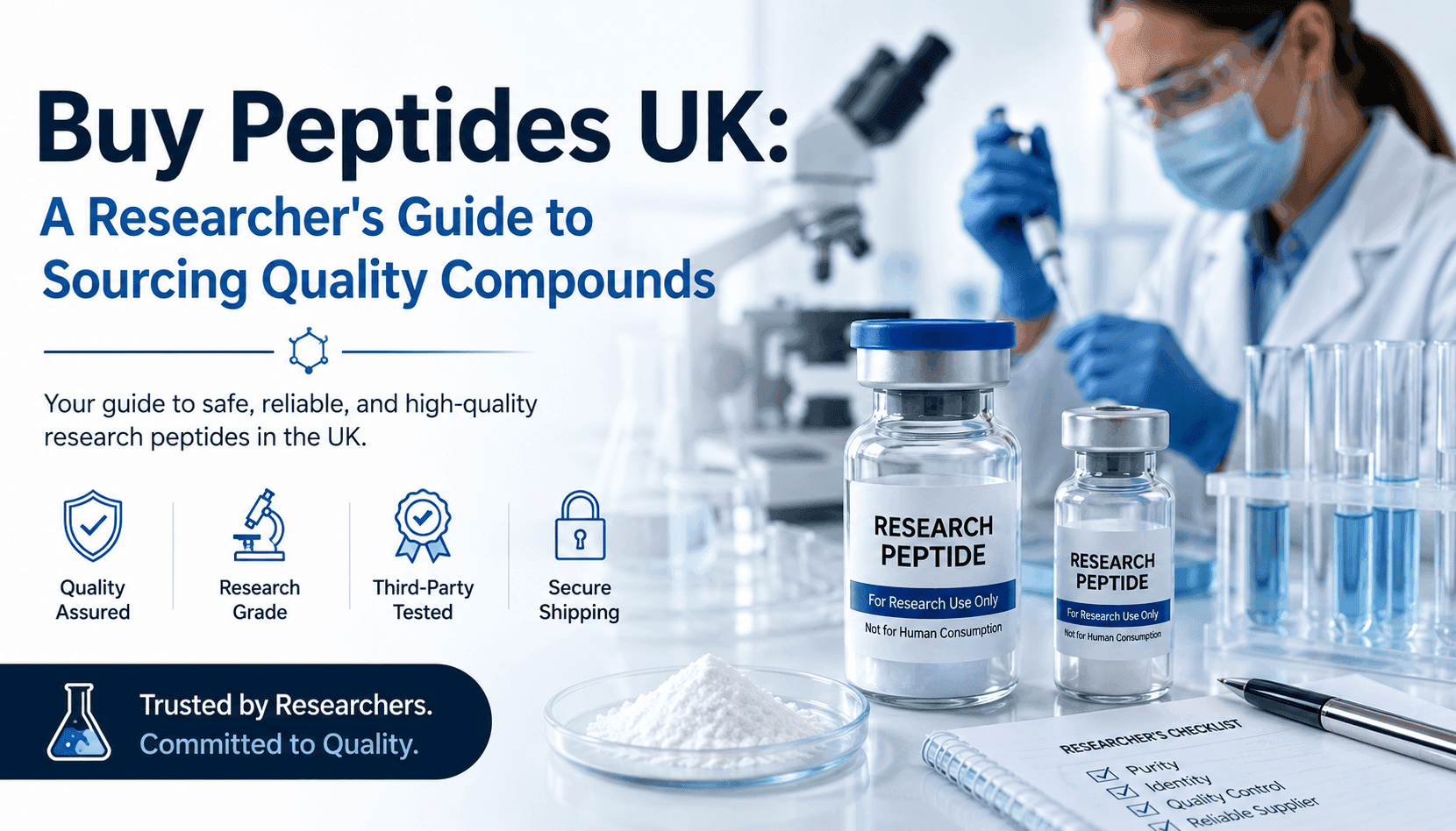
For laboratories, universities, and qualified researchers working on peptide-related studies, sourcing matters as much as the study design itself. When looking to buy peptides UK researchers should prioritise a handful of factors before selecting a supplier:
- Third-party testing – Certificates of analysis (COAs) confirming purity and identity via HPLC or mass spectrometry.
- Proper storage and handling documentation – Peptides are sensitive to temperature and light, and a reputable supplier will provide clear storage guidance.
- Traceable batch information – Batch numbers and lot testing help ensure reproducibility across experiments.
- Clear labelling as research use only – Any credible supplier of research peptides UK will state explicitly that products are not for human or veterinary use.
This is where working with an established UK peptide supplier makes a meaningful difference. Flex Peptides (flexpeptides.co.uk) positions itself in this space by offering a catalogue aimed at the research community, with an emphasis on batch documentation and consistent handling standards — the kind of due diligence that matters when experimental reproducibility is the goal.
What Makes a Supplier "Research Grade"
The term research grade peptides gets used loosely across the industry, so it's worth understanding what it should actually mean in practice:
- Purity thresholds – Reputable research-grade material is typically tested to purity levels above 98%, verified through independent lab analysis rather than in-house claims alone.
- Consistent synthesis methods – Solid-phase peptide synthesis (SPPS) protocols should be consistent between batches to reduce variability in experimental outcomes.
- Proper documentation – A COA should accompany each batch, along with a safety data sheet (SDS) for laboratory handling.
- Cold-chain shipping – Many peptides, BPC-157 included, are sensitive to heat and require appropriate packaging during transit.
Suppliers describing themselves as offering laboratory peptides UK should be able to answer questions about synthesis method, testing protocol, and storage stability without hesitation. If a supplier can't produce a COA on request, that's a signal to look elsewhere.
Questions Researchers Should Ask Before Purchasing
- Is a certificate of analysis available for the specific batch being purchased, not just a generic template?
- What synthesis and purification method was used?
- Is the product clearly labelled "not for human or animal consumption — for laboratory research use only"?
- What are the recommended storage conditions (typically lyophilised peptides are stored at -20°C, protected from light and moisture)?
- Does the supplier provide reconstitution guidance for research purposes (solvent type, concentration calculations) rather than administration guidance?
The Bigger Picture
BPC-157 remains a compound of genuine scientific curiosity, particularly in tissue repair and gastrointestinal research. But the gap between preclinical animal data and confirmed human clinical outcomes is still wide. For researchers, that gap is exactly the point — it's why the studies are being run in the first place. For anyone approaching this space, the priority should always be rigorous sourcing, transparent documentation, and strict adherence to research-only use.
Disclaimer
This article is provided for general informational and educational purposes only. BPC-157 and other peptides referenced here are not approved by the MHRA, FDA, or any other regulatory body for human or veterinary use, diagnosis, treatment, cure, or prevention of any disease or condition. All peptides sold by Flex Peptides (flexpeptides.co.uk) or referenced in this article are intended strictly for laboratory and in-vitro research purposes by qualified professionals and are explicitly not for human or animal consumption. Nothing in this article constitutes medical advice, and it should not be interpreted as an endorsement or instruction for personal use, self-administration, or off-label application of any substance. Always consult a licensed physician or qualified healthcare professional regarding any health-related questions, and consult appropriate regulatory guidance before purchasing, handling, or storing any research chemical. The author and publisher accept no liability for misuse of the information contained in this article.