Explore the characteristics that distinguish research-grade peptides, from quality control and purity standards to testing procedures and research-focused manufacturing practices.
Not all peptides sold online are created equal, and the term "research grade" gets used inconsistently across the industry — sometimes meaningfully, sometimes as little more than a label. For researchers making purchasing decisions, understanding what actually separates genuine research grade material from lower-quality alternatives is essential to protecting the integrity of any study. This article breaks down the real distinguishing factors behind the term.
Defining "Research Grade" Properly
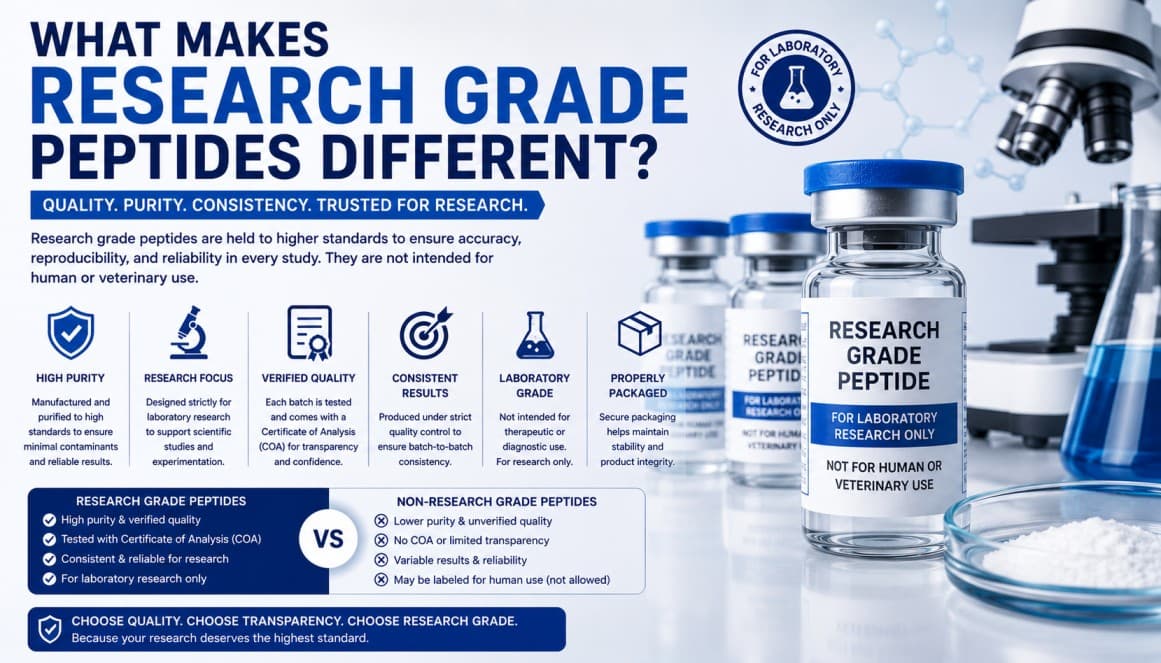
At its core, the term research grade should refer to peptides manufactured, tested, and documented to a standard suitable for scientific study — meaning verified purity, confirmed molecular identity, and traceable batch documentation. It is not a regulatory designation in the way that, say, "pharmaceutical grade" implies clinical-level manufacturing standards. Rather, it reflects a set of quality control practices that responsible suppliers apply consistently.
For anyone looking to buy peptides UK, understanding this distinction matters because the label alone doesn't guarantee quality — the documentation behind it does.
The Core Differentiators
1. Verified purity levels
Genuine research grade peptides are typically tested to purity levels of 98% or higher via HPLC, with results documented on a certificate of analysis specific to each batch. Lower-quality products may claim high purity without any independent verification behind the number.
2. Confirmed molecular identity
Purity alone isn't sufficient — mass spectrometry testing confirms that the peptide's actual molecular weight matches its labelled sequence. This distinguishes genuine research material from products that may contain the wrong compound entirely, despite appearing pure.
3. Consistent synthesis methodology
Reputable manufacturers rely on solid-phase peptide synthesis (SPPS) carried out under controlled, repeatable conditions. This consistency reduces variability between batches, which matters enormously for any study depending on reproducible results over time.
4. Proper storage and handling documentation
Research grade suppliers provide specific guidance on temperature, light sensitivity, and shelf life, recognising that even a correctly manufactured peptide can degrade if mishandled after leaving the lab.
5. Transparent, accessible documentation
A hallmark of genuine research grade material is a supplier's willingness to provide batch-specific COAs upon request, rather than vague purity claims with no supporting evidence.
How This Differs from Lower-Quality Alternatives
Peptides sold without proper testing documentation may still "work" in a loose sense chemically, but without independent verification, there's no way to confirm:
- Whether the peptide sequence is actually correct
- Whether the stated purity reflects the batch actually being shipped
- Whether the product has degraded during storage or transit before reaching the buyer
This uncertainty introduces variables that can quietly undermine an entire research project, sometimes without the researcher realising the source of inconsistent results until much later.
Why This Matters for the Credibility of Research
Studies intended for internal review, academic publication, or any form of peer scrutiny depend on materials that can be independently verified. Reviewers and collaborators reasonably expect that reported purity and identity claims are backed by documented, batch-specific testing — not simply taken on faith from a product listing.
This is one of the key reasons working with an established UK peptide supplier matters so much. Flex Peptides (flexpeptides.co.uk) positions its catalogue within this framework, offering laboratory peptides UK alongside documentation intended to support the kind of transparency researchers should expect as standard practice, not a bonus.
How to Evaluate a Supplier's "Research Grade" Claims
- Ask whether COAs are batch-specific and available on request, not just generic samples
- Confirm both HPLC purity and mass spectrometry identity data are provided
- Check whether synthesis methodology is disclosed and consistent across products
- Review storage and handling guidance provided alongside each product
- Look for clear, consistent "research use only" labelling throughout the site, not just buried in fine print
Final Thoughts
The term "research grade" should mean something concrete: verified purity, confirmed identity, consistent synthesis, and transparent documentation. For researchers, taking the time to confirm that a supplier's claims are backed by real evidence — rather than accepting the label at face value — is one of the most important steps in protecting the quality and credibility of any study built on that material.
Disclaimer
This article is provided for general informational and educational purposes only. All peptides referenced here, including those sold by Flex Peptides, are not approved by the MHRA, FDA, or any other regulatory body for human or veterinary use, diagnosis, treatment, cure, or prevention of any disease or condition. Products are intended strictly for laboratory and in-vitro research purposes by qualified professionals and are explicitly not for human or animal consumption. Nothing in this article constitutes medical advice. Always consult a licensed physician or qualified healthcare professional regarding any health-related questions, and consult appropriate regulatory guidance before purchasing, handling, or storing any research chemical. The author and publisher accept no liability for misuse of the information contained in this article.