NAD+ and NMN are closely related compounds studied in cellular research. Explore their key differences, biological pathways and research applications, plus what to consider when buying NAD+ for research in the UK.
NAD+ and NMN (nicotinamide mononucleotide) are closely related molecules that frequently appear together in cellular ageing research. While connected, they're distinct compounds with different properties relevant to laboratory study.
What Is NMN?
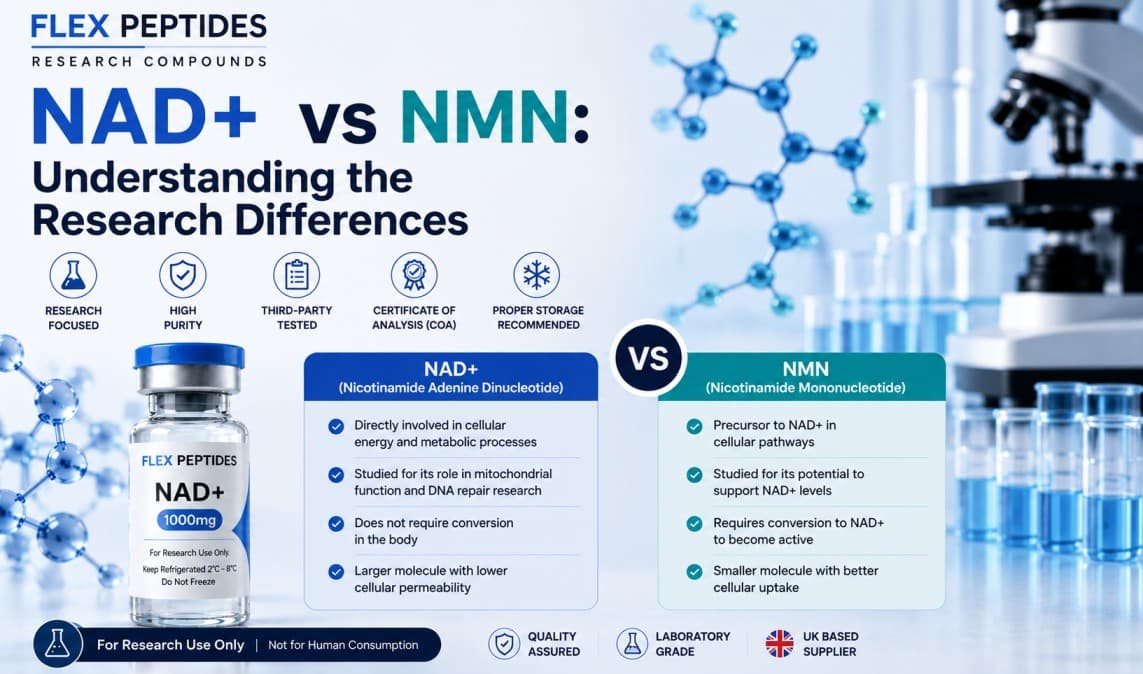
NMN is a nucleotide that serves as a direct precursor to NAD+ within cellular metabolic pathways. In simple terms, cells convert NMN into NAD+ through an enzymatic process, making NMN one step upstream in the same biological pathway.
Structural and Functional Differences
| NAD+ | NMN |
|---|---|
| The active coenzyme itself | A precursor molecule that converts into NAD+ |
| Directly involved in redox reactions | Requires enzymatic conversion before functioning as NAD+ |
| Larger, more complex molecule | Smaller molecule, structurally simpler |
Why Researchers Study Both
Some researchers study NAD+ directly to examine its role in cellular energy metabolism and DNA repair pathways, while others focus on NMN to understand precursor supplementation pathways and how cells regulate NAD+ synthesis. Comparing the two helps build a fuller picture of NAD+ metabolism as a whole.
Research Applications
Both compounds are used in laboratory studies exploring mitochondrial function, sirtuin activity, and cellular ageing models — though the specific research questions and experimental protocols differ depending on which molecule is being studied.
Disclaimer
NAD+ and NMN, as supplied by FlexPeptides, are intended strictly for laboratory research. Neither compound is licensed as a medicine by the MHRA, and neither is intended for human consumption or use. This article does not compare the two for personal supplementation purposes.