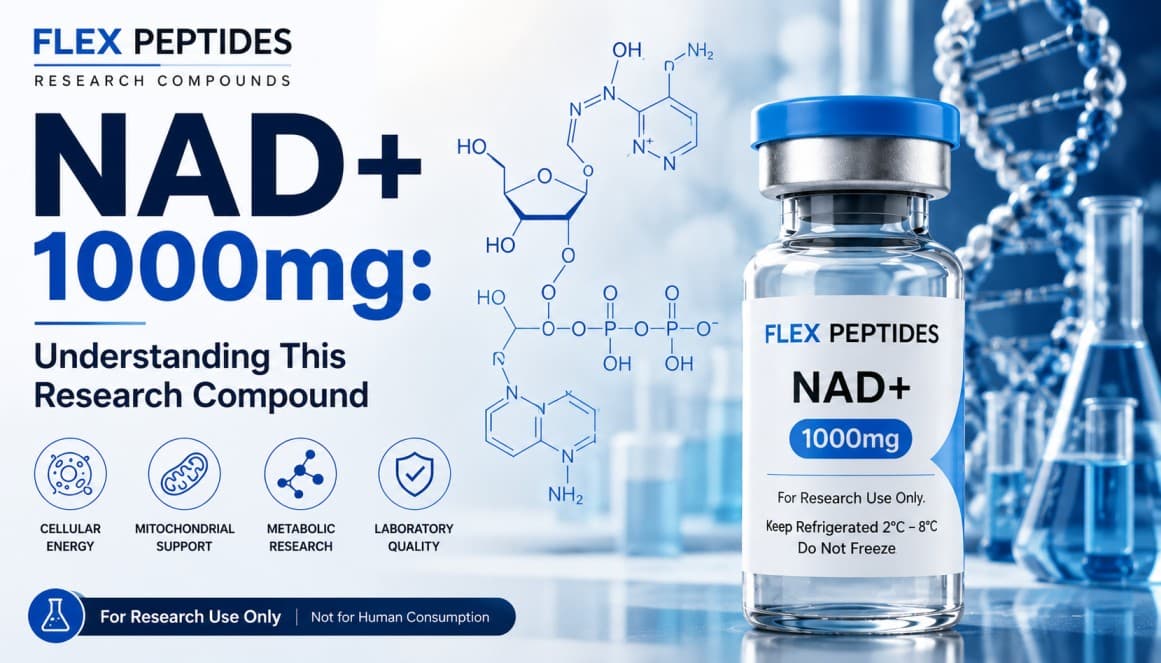
Learn about NAD+ 1000mg and its significance in cellular, mitochondrial and metabolic research. Discover key quality factors to consider when choosing and buying NAD+ for research in the UK.
NAD+ is often supplied to laboratories in specific quantities — 1000mg being one of the more common presentations researchers request when working with cell cultures or larger-scale experimental protocols. Understanding what this quantity represents, and how it fits into a research setting, helps clarify why it's specified this way.
What "1000mg" Refers To
A 1000mg quantity typically describes the total mass of NAD+ powder contained within a research vial or batch, rather than any form of individual dosing. In a lab environment, this total quantity is usually diluted, measured, and distributed across multiple experimental samples according to a specific protocol designed by the researcher.
Why Quantity Matters in Research Settings
Precise, known quantities allow researchers to:
- Maintain consistency across replicate experiments
- Calculate accurate concentrations for in-vitro work
- Compare results reliably against other studies using known reference amounts
Purity and Quality Considerations
When sourcing NAD+ at any quantity, researchers should look for a certificate of analysis (COA) confirming purity, along with clear information on storage conditions, as NAD+ is sensitive to temperature, light, and moisture.
Disclaimer
NAD+ 1000mg, as supplied by FlexPeptides, is a research compound only. It is not licensed by the MHRA as a medicinal product and must not be used for human or animal consumption, injection, or therapeutic purposes of any kind. This article does not provide dosing guidance for personal or human use, and none should be inferred.