Explore how Glutathione and NAD+ are studied in cellular research, focusing on antioxidant defence, redox balance and energy metabolism. Discover key quality factors to consider when buying research compounds in the UK.
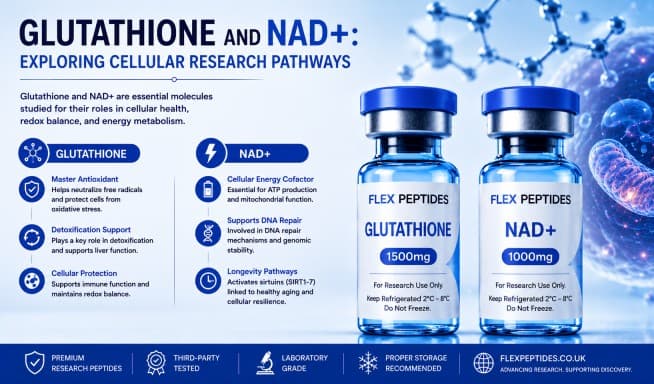
Glutathione and NAD+ are both central figures in cellular biochemistry research, and though structurally distinct, they intersect in ways that make them a frequent pairing in laboratory study.
Two Distinct Molecules
Glutathione is a tripeptide antioxidant, primarily involved in neutralising reactive oxygen species and supporting detoxification. NAD+ is a coenzyme, essential to energy metabolism and central to redox reactions across nearly every cell.
Where the Research Overlaps
Both molecules are studied in relation to:
- Cellular oxidative stress and redox balance
- Mitochondrial function
- Ageing-related biological processes
- Metabolic and detoxification pathways
How They Interact Biochemically
Some research has explored how NAD+-dependent enzymatic activity and glutathione's antioxidant function may influence one another within the broader context of cellular redox balance, an area of ongoing scientific interest.
Why Study Them Together
Because both molecules relate to how cells manage oxidative stress and energy production, researchers sometimes examine them in tandem to build a more complete understanding of cellular resilience and mitochondrial health.
Sourcing for Laboratory Use
FlexPeptides supplies both glutathione and NAD+ as separate, clearly labelled research compounds, each accompanied by batch-specific quality documentation for laboratory use.
Disclaimer
Glutathione and NAD+, as discussed here and supplied by FlexPeptides, are research chemicals only. Neither is licensed as a medicine by the MHRA, and neither is approved, intended, or supplied for human or animal use, consumption, or therapeutic application. This article is provided for educational purposes only and does not constitute medical advice.