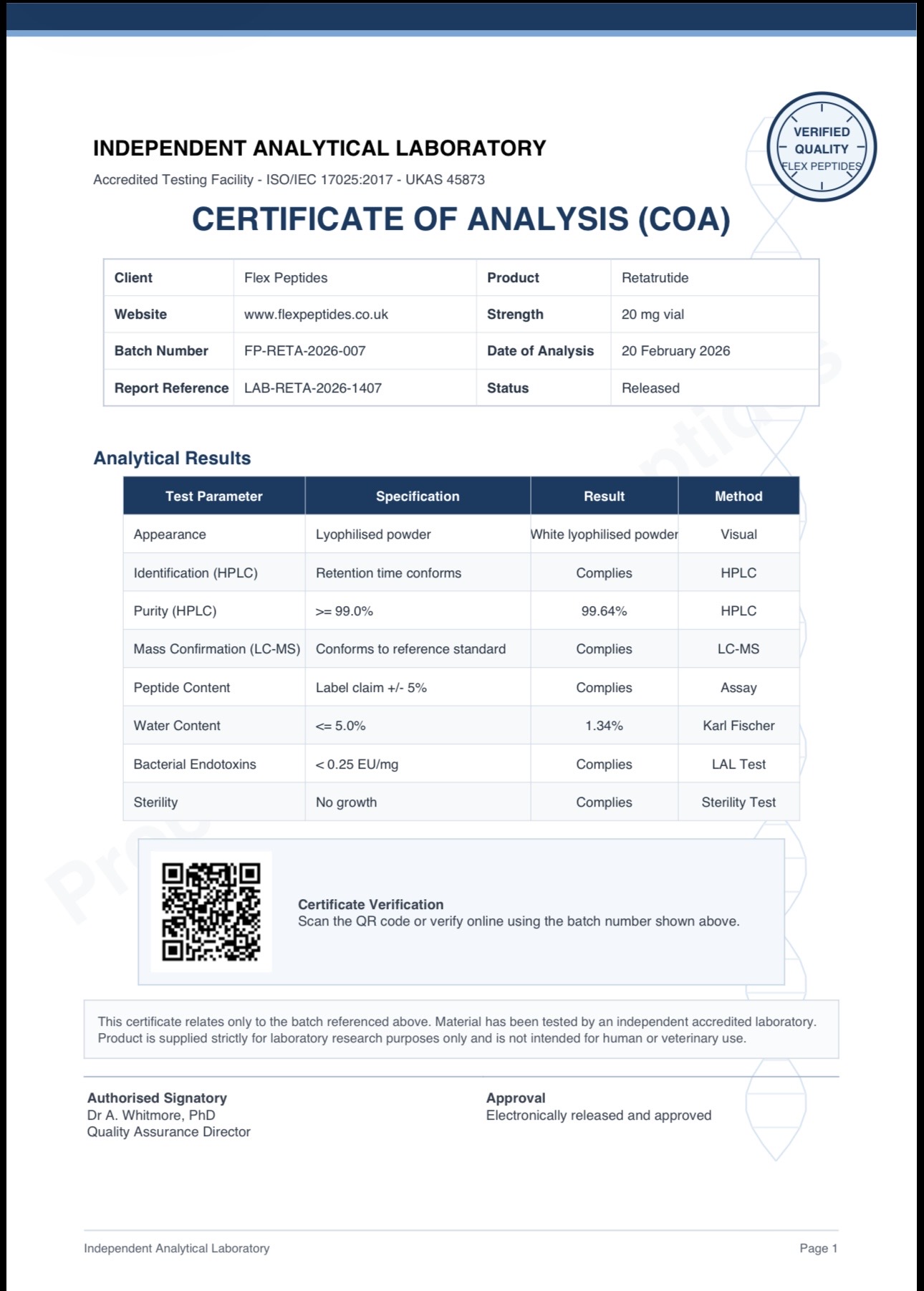
Retatrutide is an investigational peptide currently under clinical development for the study of obesity and metabolic disorders. It is classified as a triple receptor agonist, designed to activate the glucagon-like peptide-1 (GLP-1), glucose-dependent insulinotropic polypeptide (GIP), and glucagon receptors. These receptor pathways play central roles in appetite regulation, glucose homeostasis, insulin secretion, and overall energy balance.
By simultaneously targeting these three metabolic pathways, retatrutide is being studied for its potential to influence body weight regulation, glycaemic control, and energy expenditure. The combined receptor activity differentiates it from single- or dual-agonist compounds, and it has attracted significant research interest within the fields of endocrinology and metabolic science.
In controlled clinical trial settings, retatrutide has demonstrated substantial effects on weight reduction and improvements in various metabolic markers. Ongoing studies continue to evaluate its safety profile, tolerability, optimal dosing strategies, and long-term metabolic impact.
Retatrutide remains an investigational compound and is not approved for general medical use. Its safety and efficacy have not been fully established outside of regulated clinical research environments.